International Journal of Veterinary Science and Research
Review On Camel Production under Mixed Farming Systems: Ethiopia
1Muyu Muluke District Agriculture Office, Huse, Ethiopia
2Hirna Regional Veterinary Laboratory Hirna, Ethiopia
3Habro District Agriculture Office, Gelemso, Ethiopia
Author and article information
Cite this as
Fuad A, et al. Review On Camel Production under Mixed Farming Systems: Ethiopia. Int J Vet Sci Res. 2026; 12(2): 17-24. Available from: 10.17352/ijvsr.000158
Copyright License
© 2026 Fuad A, et al. This is an open-access article distributed under the terms of the Creative Commons Attribution License, which permits unrestricted use, distribution, and reproduction in any medium, provided the original author and source are credited.In Ethiopia, the Livestock production system is broadly classified into pastoral, agro-pastoral, and mixed crop-livestock, peri-urban, and urban production systems. Camels are predominantly kept in the pastoral and agro-pastoral production systems. Only a few male camels are to be found in the mixed crop-livestock system in Ethiopia. Mixed farming is a process by which farmers produce crops and rear livestock simultaneously to ensure sustainable agriculture. The production of one or more crops and livestock on available resources is crop-livestock diversification. Livestock husbandry, as seen in the system, is subjugated by camels, goats, cattle, and sheep, and the main source of food being milk; therefore, pastoralists tend to keep large herds to ensure enough milk supply and income generation. The major ethnic groups owning camels in Ethiopia are the Afar, Somali, and Oromo. Camels play diverse roles in the livelihood of the poor pastoralists, including the building of assets, insurance against unexpected events, have spiritual and social values, traction and movement of goods, food supply, income generation in Ethiopian pastoralists, and very recently, it plays pronounced role in the export revenue of the country in both live animal and carcass export. Currently, the estimation of camel population in Ethiopia was 4.5 million, in which camel production of the pastoralists’ region; Somali accounts for about 58 percent of the total country “’s camel population, and the remaining five pastoralists‟ regions of the country account for 42 percent of the national camel population. The main economic value of camels is derived from their milk, meat, use in transportation, and for riding in sports (racing), and tourism. In Ethiopia, the lowland areas are relatively poorly served in terms of infrastructure and public services such as roads and veterinary services, which may exacerbate livestock morbidity and mortality. Challenges for Camel production in Ethiopia are feed and water shortage, disease prevalence, lack of Infrastructure serves, shortage of grazing land, animal health problem and predator, and a lack of a friendly-oriented market system. Opportunities of the camel production system are to export live animals and meat; there will also be an increase in domestic demand due to urbanization and economic growth
Around 95% of the camelids in the Old World are Dromedaries, with nearly all the remaining 5% being domestic Bactrian Camels (there are no more than a few thousand wild Bactrian Camels). In the New World, around 47% of camelids are Llamas, 41% Alpacas, 8% Guanacos, and 4% Vicunas [1]. Camelids originated in North America during the Eocene, 40-45 million years ago, andbecame extinct laterin their original places (Cui et al., 2007).
Camels that would give rise to the dromedary and Bactrian camel spread into Asia, across Europe, and as far west as Spain. Camelids would give rise to the current-day South American species spread south across the Panamanian Land Bridge. Because of their ability to thrive under tough conditions of extreme temperature and scarce food and water, domesticated Camelids have been extremely important to the development of human cultures in the steppes of Eurasia, the deserts of Africa, and the arid Andes of South America. The earliest Camelids were like modern guanaco but rabbit-sized (30 cm at the shoulder). All Camelids are diurnal and are adapted to harsh and dry climates, and are all highly social [1].
According to the FAO [2] report, currently, there are about 97 dromedary and 16 Bactrian camel breeds all over the world. Dromedary (Camelus dromedarius), also known as the one-humped/Arabian camel, is associated with East and northern Africa as well as southwestern Asia. It belongs to the domain Eukarya, the kingdom of Animalia, phylum of Chordata, class Mammalia, order Artiodactyla, family Camelidae, Genus Camelus, and species of dromedaries. This camel is entirely domesticated (except for a free-ranging feral population in central Australia introduced in the late 1800s). The Dromedary was domesticated around 4000-5000 years ago; the wild form is believed to have gone extinct by 2000-5000 years ago. In addition to their natural migration routes, archeological finds indicate that both the dromedary and domestic Bactrian camel were imported into the Northern provinces of the Roman Empire for military and civilian use (Pigière & Henrotay, 2012).
The 1-humped camel (Camelus dromedarius), referred to as the Arabian or dromedary camel, was domesticated approximately 4,000 years ago in the southern Arabian Peninsula, possibly in present-day Yemen and Oman. Its introduction into East Africa is thought to have occurred through the Horn of Africa, via the Suez Canal, approximately 3,500 years ago. Adaptation to a hotter climate is vital for future livestock as heat stress can significantly reduce their productivity, health, and fertility. Camels have developed, through the millennia, the ability to produce quality meat, milk, and fiber in some of the hottest and most hostile environments on the globe. According to the Abri 2019 live animals statistics, the worldwide camel population is estimated at 35 million heads, most of which are in Somalia, Sudan, Niger, Kenya, Chad, Ethiopia, Mali, Mauritania, and Pakistan. Moreover, partly due to climatic changes, areas of camel rearing are expanding, especially in Africa [3].
The major ethnic groups owning camels in Ethiopia are the Afar, Somali, and Oromo [4]. Even though camels are found in a different agro-ecological zone in Ethiopia, few studies were undertaken regarding the distribution and characteristic features of different camel populations [5]. A camel-based livestock system will generate employment and help to improve the income of the local rural population [6]. Among the large camelids (dromedary and Bactrian), dromedary camels compose about 95% of the population [7]. Due to their unique physiology and considering the current climate change impacts on ecosystems, camels are poised to be an excellent candidate species for production. This is specifically true in regions where agro-pastoralism is being replaced by pastoralism due to climate change [7]. However, to harness their potential, an improved understanding of the genetics underlying their unique biology is needed.
According to a report by [8], eastern Africa is known as the heartland of camel production; out of 25.89 million camels worldwide, 7.0 million, 4.25 million, and 2.40 million camels are found in Somalia, Sudan, and Ethiopia, respectively. These animals are integral, vital socioeconomic cornerstones and support the survival of millions of people in the semidry and arid zones of Asia and Africa. Over 80% of the world’s camel population is found in Africa, with the highest concentration in Northeast Africa, which accounts for 63% of the world’s camel population. Ethiopia is estimated to be the third-largest camel herd in the world after Somali and Sudan [9].
Currently, the estimation of camel population in Ethiopia was 4.5 million, in which the camel production of the pastoralists regio, Somali, accounts for about 58 percent of the total country’s camel population, and the remaining five pastoralist regions of the country account for 42 percent of the national camel herd [10].
In Ethiopia, the lowland areas are relatively poorly served in terms of infrastructure and public services such as roads and veterinary services, which may exacerbate livestock morbidity and mortality [11].
In addition, livestock diseases are more prevalent in the moisture-stressed areas of the lowland compared to the highland and midland areas. In Ethiopia, camel and sheep production are common pastoralism practices in three major pastoralist regions of Afar, Somali, and Borana [12].
Pastoral production systems are those in which at least 50 percent of the gross incomes of households (i.e., the value of market production and the estimated value of subsistence production consumed by households) come from pastoralism or its related activities, or else, where more than 15 percent of households’ food energy consumption involves the milk or dairy products they produce. However, these systems are undergoing rapid adaptive changes and transformations to cope with emerging demographic and economic factors. Camels can survive under harsh climatic conditions and have the potential to enhance pastoral household livelihoods under this distressful environment. The species of domestic camels found in Ethiopia is the one-humped dromedary camel (Camelus dromedaries) [13].
Camels play diverse roles in the livelihood of the poor pastoralists, including the building of assets, insurance against unexpected event, have spiritual and social values, traction and movement of goods, food supply, income generation in Ethiopian pastoralists, and very recently it plays pronounced role in the export revenue of the country in both live animal and carcass export [13].
These areas receive low and erratic rainfall with high temperatures and are extremely vulnerable to land degradation and cyclic droughts. They also support a wide range of biodiversity by hosting many endemic animal and plant species. However, the biggest impacts of climate change are going to be seen in the mixed-farming system in developing countries, where people are already highly vulnerable. The vulnerability to climate change in developing countries is mainly due to their reliance on rain-fed agriculture [14].
Both men and women have vital roles in the continuation and adaptation of pastoral and mixed farming systems. Women play a pivotal role as livestock herders, natural resource managers, income generators, and service providers, but all these tasks by themselves are influenced by gendered norms, values, and relations [11].
Pastoralism is a culture, mode of production, in Africa, especially in the Horn, whereby pastoralists depend on their livestock (camels, Sheep, and Goats, Cattle). They migrate seasonally due to rainfall and pasture availability. Since the last three decades, pastoralism has shown a dramatic change in its socioeconomic and livelihood systems, which were triggered by the interruption of wet and dry season grazing patterns, drought, and changes in land us, all these negative implications affecting livestock population and production [10].
2. Methodology
2. Methodology
Summarizing different literature reviews on camel production under mixed farming in Ethiopia, therefore, the objectives are to review the production performance, challenges, and opportunities of Camel production in Ethiopia. Specifically, under a mixed farming system.
3. Description of the system
3.1. Mixed Farming Systems (MFS)
3.2. Definition and geographical distribution
Mixed farming is a process by which farmers produce crops and rear livestock simultaneously to ensure sustainable agriculture. The production of one or more crops and livestock on available resources is crop-livestock diversification. Diversified farms can ensure food security, conserve biodiversity, improve dietary preferences, increase household income, reduce vulnerability to shocks, and create job opportunities. Mixed production systems also enhance land productivity and improve water use efficiency. Farm diversification is a means to minimize risks and insurance against crop failures. Various farm activities provide a wide range of responses to uncertain conditions and increase household income and resilience. Households that practice crop-livestock systems have improved 50% of productivity and farm income in the highlands of Ethiopia compared to small holders who only raise crops [15].
In many developing countries, including Ethiopia, most smallholder farmers struggle to attain nutritional and food security and poverty alleviation through agricultural diversification. Hence, defined agricultural diversification as the way farmers grow more than one crop on a given piece of land in any year to reduce vulnerability, marketing risks, and income, and biological instability. Diversification is common in every society; however, its extent and effect vary from region to region and household to household within the same area. The increasing risks of crop failure due to erratic rainfall and crop disease continue to force farmers to diversify [16].
Productivity in Crop-Livestock Systems depends on agro-ecological factors such as rainfall, irrigation, moisture availability index, length of the growing period, etc.; adoption of improved technologies; socio-economic factors such as landholding size, population density, etc., and infrastructure variables. The interaction between crop and livestock sectors is captured through the variable feed availability in the livestock productivity equation and livestock numbers in the crop productivity equation.
Pastoralists are not able to settle or take advantage of available production technology, mainly artificial insemination technology. Sizable pieces of land are owned by agro-pastoralists, where they practice integrated crop-livestock production. In the system, the crop debris is only used when there is a scarcity of feed, but it has high nutritional deficiencies. Livestock husbandry as seen in the system is subjugated by camels, goats, cattle, and sheep, and the main source of food is mil; therefore, pastoralists tend to keep large herds to ensure enough milk supply and income [17].
The rural dairy production system is part of the subsistence farming system that contributes up to 98% of the total milk production in Ethiopia and includes pastoralists, agro-pastoralists, and mixed crop-livestock producers. The system is not market-oriented, and most of the milk produced in this system is only for home consumption. The level of milk surplus is determined by the demand for milk by the household and its neighbors, the potential to produce milk in terms of herd size and production season, and access to a nearby market. The surplus is mainly processed using traditional technologies, and the processed milk products, such as butter, ghee, ayib, and sour milk, are usually marketed through the informal market after the households satisfy their need [18].
Livestock production in Ethiopia is broadly classified into pastoral, agro-pastoral, and mixed crop-livestock, peri-urban, and urban production systems. The highland agro-ecology with a mixed crop-livestock system is typical for areas above 2,200 m above sea level (m.a.s.l) and is characterized as a system in which livestock husbandry and rain-fed cropping are closely interlinked. Livestock provides inputs (draft power, transport, and manure) to other parts of the farm system and generates consumable or saleable outputs (milk, meat, eggs, hides and skins, wool, hair, and manure). Crop residues are used as livestock feed; animals can be sold and revenues reinvested in agriculture or sold when the crop is failing because of weather or pests; cereals and most staple foods are produced in quantities that cover the needs of the family, and excess is sold [19].
The lowland agro-ecology with mixed crop-livestock system denotes elevation ≤1,500 masl, where farmers herd livestock in rangelands and produce crops on fertile land. The system is understood in a dual sense: firstly, it refers to farming systems entirely based on livestock but practiced in proximity to and perhaps functional association with cropping farming systems; secondly, it refers to the livestock subsystem of crop-livestock farming [19].
3.3. Component of the mixed farming system in Ethiopia
This system is primarily concentrated in the plateaus of the Rift Valley, extending from Derashe to Butajira in the western part and from Guji to Eastern Harerghe in the eastern part. Several national parks are found in the southern part of the farming system, with Awash National Park the main one. The dominant crops are maize and haricot beans, which are often intercropped. Secondary crops include wheat, teff, potato, sweet potato, intensive vegetable production (onion, tomato, irrigated snap beans, and rainfed pepper), greenhouse flower production for export, pawpaw, watermelon, and strawberry, as well as vineyards. The average farm size in the eastern highland maize mixed farming system is about 1–2 ha. In the Wolaita zone, the average landholding is less than 0.75 ha per family of seven. The system is characterized by high management intensity, a high level of market linkages, and extensive crop commercialization. This farming system has the second largest area under large-scale irrigation [20].
3.4. Camel production systems under the mixed farming systemin Ethiopia
Livestock production systems in Ethiopia can be broadly classified into two as the traditional production systems (pastoral nomadic, pastoral transhumant, agro-pastoral, and smallholder mixed crop-livestock) and the modern production systems are ranching, intensive/semi-intensive peri-urban/urban, feedlot, and commercial production [21]. Camels are predominantly kept in the pastoral and agro-pastoral production systems. Only a few male camels are to be found in the mixed crop-livestock system. Pastoralists keep indigenous breeds/types and obtain more than 50% of household income from livestock and livestock products. The system is much simpler than the mixed crop-livestock systems of the highlands. There are a few inputs other than labor. Herd and flock composition are regulated to some extent (only a few breeding males are maintained [21].
Livestock husbandry, as seen in the system, is subjugated by camels, goats, cattle, and sheep, and the main source of food is mil; therefore, pastoralists tend to keep large herds to ensure enough milk supply and income [17].
Grazing management and herd movement are determined by the seasonal patterns of rainfall and the availability of water. There is little to no interaction with crop agriculture, and although a range of livestock species is managed to reduce risk, one or two species dominate. For example, camels and goats are the main species in Afar and Somali, while in the Borana zone; cattle are still the main species. Production is mainly for subsistence, but surplus animals are sold [21].
Generally, camel populations have been increasing in the pastoral areas during the past 20 years by at least 10, 20, 25, 15, 25, and more than 200% in Gode, Jijiga, Shinille, Mille, Amibara districts, and the Borana zone, respectively [21].
In the agro-pastoral production system, crop agriculture is combined to a limited extent with livestock rearing. It is practiced in semi-arid areas and may take the form of either a sedentary or transhumance way of living. Indigenous breeds/types are reared, and livestock contributes between 10 and 50% of household incomes. Mixed crop-livestock production systems prevail in sub-humid and humid central highland parts of Ethiopia. The system is sedentary, and livestock is secondary to crop production. It is characterized by smallholdings of about 1 to 3 ha of land and two to four heads of cattle [22].
3.5. Characteristics of camel production systems in Ethiopia
3.5.1. Purpose and importance of camel: According to Simenew Keskes [23], Camelids have played critical roles in a range of human societies. A multi-purpose animal, unlike any other domesticated animal, has been utilized by humans for centuries for transport, traction power, milk, meat, wool, skin, and even fuel. The main economic value of camels is derived from their milk, meat, use in transportation, and for riding in sports (racing), tourism [23].
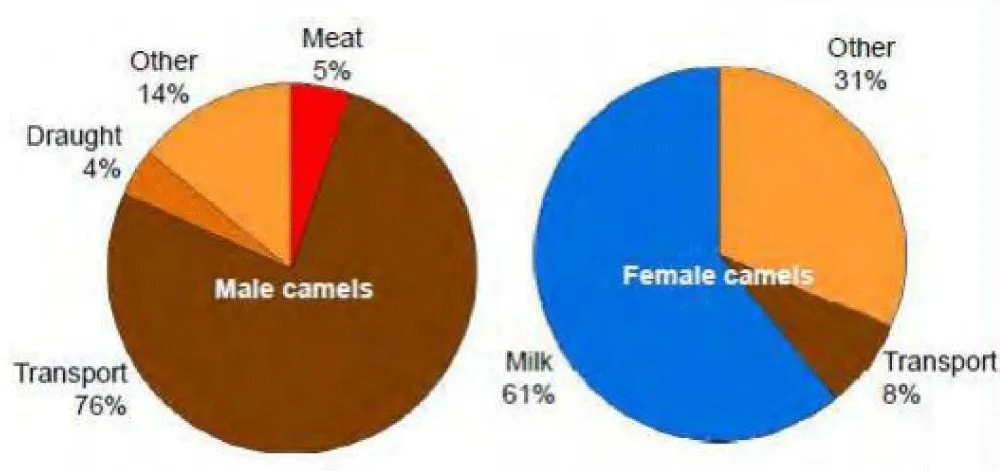
In the case of tribal feuds, camels are the only means of payment of blood money to the lineage of the deceased. Pastoralists see camels as a banking system or security against drought, disease, and other natural calamities. In general terms, however, milk and meat dominate the overall value derived from camels. In Ethiopia as a typical example the percentage contribution of meat, milk, transport, and other services are in relation to the sex of camels are indicated in Figure 1 in relation to the sex of camels [23].
The camel production systems in Africa are diverse enough. The main characteristics of the major geographical areas will be analyzed in the following. Three main areas are distinguished: East Africa (Somalia, Sudan, Ethiopia), North Africa (Egypt, Libya, Tunisia, Algeria, and Morocco), and Central Africa (Kenya, Chad, Mali, Mauritania, and Nigeria). Concerning the case of Somalia, Sudan, and Ethiopia, the camel production system is marked by the existence of large herds (100-5 000 heads/flock) and of an important diversity of races. The average weight of an animal varies between 40 and 750 kg, and it is around 650 kg. The big animal’s size is dominant [24,25].
The objective of the breeding depends on the races. The dairy races exist and produce on average 5 to 10 liters per day. Milk marketing is practiced in Somalia and Ethiopia [24,25]. Animal herders in Sudan lead a nomadic life combined with minor crop production activities for about four months of the year, i.e., they are agro-pastoralists.
3.5.2. Production performance: Milk is a usual and favorite food for camel owners. The daily milk yield of Ethiopian camels ranges from 2.0 to 12.0 liters per day, depending on feed availability, season, and water access. Lactation length is 12 months in most cases, but factors affecting lactation length include the season of the year and demand for milk for a more prolonged time. Lactation length can be prolonged when there is good feed availability and if demand for milk by the owners is increasing [23].
The frequency of camel milking by the pastoralists varies, and it depends upon the following factors: quality of milk produced per animal, the extent of demand for milk, season, and number of milking camels present in the herd, availability of other food for the camel own age and health of the calves. Generally, the camels are milked two to three times per day. The camels give more milk when milked in the evening than in the morning [23].
3.5.3. Meat production in Ethiopia: The camel meat production is estimated to be very low as compared to other farm animal; however, information is quit. In the Ethiopian situation, camels are slaughtered when a respected person in the community dies, and during weddings or any religious, national, or regional holidays. Traditionally, camel meat consumption is not common in a subsistence system, the size of the carcass needing to be shared among a wide number of people. However, urbanization has increased the camel meat demand in most of the arid countries difficult to collect since informal markets are the main part of the camel meat involvement [23].
3.5.4. Milk production: Their role as a source of milk is particularly at times of drought, a commonplace phenomenon that drives most of all other species of animals out of milk. Camel milk is highly nutritious, containing niacin, Vitamin C, five times higher than cow “’s milk, ten times the iron, and a very high calcium level. It also contains only 2% fat molecules joined to protein, so there is no stress on the liver to process fats. Camel milk is considered a complete food and can be consumed exclusively, meeting all nutritional requirements for the pastoralists [23].
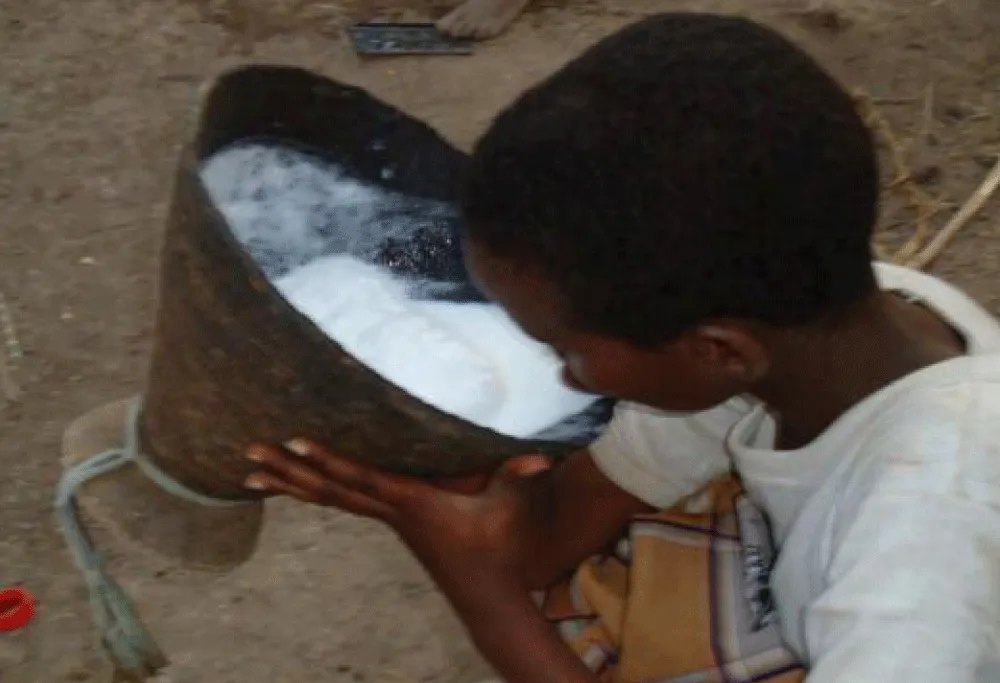
Camel fat also contains higher concentrations of long-chain fatty acids (C14-C18) than short-chain fatty acids and is therefore healthier. Camel milk does not coagulate easily. Camel milk is the sole source of protein in the desert, where other sources are unthinkable (Figure 2). In Ethiopia, the Afar farmers recamels simultaneously get on average 1 to 1.5 liters of milk with Afar zebu against 4 to 5 liters with Dankali camel [23]. The total national milk production remains among the lowest in the world, even by African standards. The total annual milk production in Ethiopia from about 10 million milking cows is estimated at about 3.2 billion liters, and this translates to an average production of 1.54 liters/cow per day (CSA 2008). The contribution of the different livestock species to the total production is about 81.2% from cattle, 6.3% from camels, 7.9% from goats, and 4.6% from ewes [26]. Due to the highly perishable nature of milk and mishandling, the amount produced issubject to high post-harvest losses. Losses of up to 20–35% have been reported in Ethiopia for milk and dairy products from milking to consumption [27]. Total annual milk production increased at a rate of 1.2% for indigenous stock and 3.5% for improved stock [28].
3.5.5. Other products and uses of camel: Camel hide, wool, and dung are also products used by humans in different ways. The processing of camel hides is common in Northern Africa and the Middle East. Italy and the United States are the major market destinations for camel leather products. The good news from camel hide industries is that the natural scarring effect does not diminish a hide’s quality as it makes each one unique [23].
In Ethiopia, nobody collects and processes camel hide, and the nationloses quite a considerable income from this resource [23]. In Kenya, the price of one camel hide is equal to four oxen hides. This indicates that camel hide processing is a good venture to take part in as a business for any interested body in East Africa, where there are huge resources. Camel wool is harvested and processed for making padded clothes, quilts, and mattresses. In Asia and Latin American countries, quite large quantities of wool are collected annually. Dromedary camels in some areas of North Africa and Asia produce wool, though not all breeds are meant for wool production [23].
3.5.6. Challenges and opportunities of camel production
3.5.6.1. Opportunities for camel production
3.5.6.1.1. Market opportunities
The Middle East is one of the major consumers of livestock and livestock products from Ethiopia. The Middle East annually imports 831.66 thousand metric tons of meat; 12.66 million heads of sheep; 159.96 thousand cattle; and 29.02 thousand camels. The average annual revenue from these imports by the Middle East amounts to about USD1.94 billion (Amanuel Ayele, 2019).
Ethiopia has a comparative advantage in terms of geographic proximity to the Middle Eastern markets, with the potential for the quickest delivery time of fresh meat or meat products. Ethiopia “’s lowland cattle, sheep, goat, and camel breeds are also highly demanded in the Middle East due to their better taste and the organic nature of their production (Amanuel Ayele, 2019).
In addition to the growing opportunity to export live animals and meat, there will also be an increase in domestic demand due to urbanization and economic growth. In general, the opportunities of livestock marketing in Ethiopia are resource availability; demand availability both regionally and in the Middle East; proximity to the markets of neighboring countries; development of export-abattoirs within the country and their substantial demand for lowland animals, especially camel; and the tendency of both the government agencies and the NGOs to work towards integrating the pastoral marketing cooperatives with the export abattoirs supply chains (Amanuel Ayele,2019).
livestock marketing interventions, and, during the last seven years or so, government policy support to formal livestock and meat exports has contributed to a clear growth in this area. For example, according to the National Bank of Ethiopia, between 2005 and 2010, the number of formal live animal exports increased from 163,000 to 334,000, and meat exports rose from 7,717 to 10,000 tons. When combined, these trends accounted for export values of USD43 million in 2005, rising to USD125 million in [29]. Furthermore, the main supply areas for this growing formal trade were pastoralist areas of the country, especially the Borana and the Somali region [29].
On the other hand, large camel population resources, the existence of suitable agro-ecologies for camel milk production, increasing domestic and international demand for camel milk, strong social capital and high women involvement, better market opportunity, and proximity to international markets indicate the potential and opportunities for camel milk production and marketing development in the pastoral areas of eastern Ethiopia. Such an increase in the demand side will be the impetus for the pastoralists and agro-pastoralists, camel milk marketing cooperatives, traders, and private processing industries to increase their outputs [30].
Besides, availability of actors in the camel milk value chain though not well structured, specific policy reforms such as privatization and commercialization, the establishment of new regional livestock offices, cooperative promotion offices, conducive government policy for the pastoral area and credit institutions, employment opportunities, and diversification of family business are identified as major opportunities for improving the camel milk business in the pastoral areas of eastern Ethiopia [30].
3.5.7. Challenges for camel production in Ethiopia: Feed shortage and water problems, disease prevalence, and other problems were the principal constraints of the pastoralists in their camel production. In addition to the above main problems for the Ethiopian pastoralists, lack of veterinary services, lack of governmental or private drug stores, and lack of professional support towards improvements of production and productivity of their camels are also listed. The other hindrance to their livelihoods is the absence of a pastoral-friendly market system and structures [23].
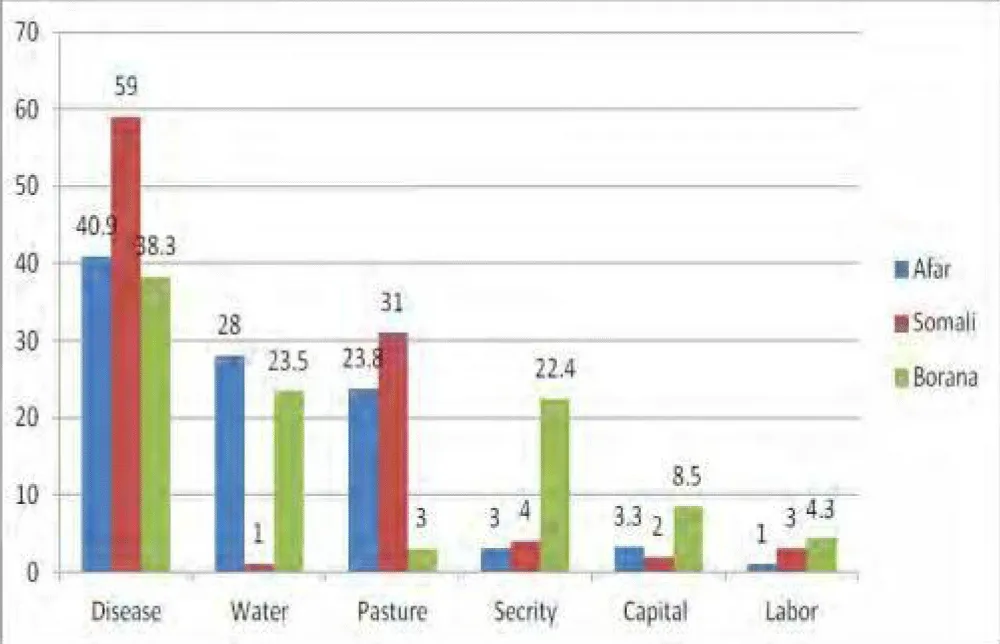
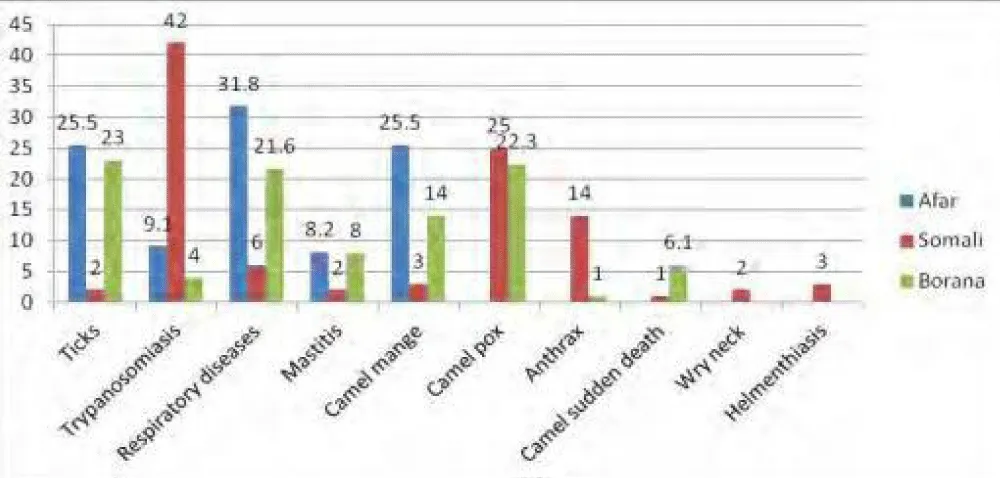
Respiratory tract problems and external parasite infestations, Trypanosomiasis, brucellosis, and internal parasite infestation are also the diseases of livestock listed by pastoralists in Ethiopia. Repeated improper application of antibiotic treatment is highly practiced by the pastoralists themselves for any type of health problems of all their livestock species, and this might lead to drug resistance to the common antibiotics [23]. The main constraints of Somali camel production mentioned in the study area were diseases, lack of pasture, security, and lack of capital (Figure 3 and 4).
3.5.7.1. Feed and water challenges
In the most of the study area, 80.0% of the respondents stated that the importance of shortage of feed as a limiting factor for camel production followed by water shortage (61.7%) However, the factors to be considered as a production constraint in the study area of Ethiopia were included shortage of feed, shortage of water, shortage of grazing land, animal health problem and predator [31].
3.5.7.2. Health challenges
Camels seem to suffer from fewer diseases than other domestic animals, and epidemics are considered rare. However, camels are affected by many other diseases, some of which are unknown to date. Infectious and parasitic diseases appear to be the major constraints that are hampering the potential performance of camels. For instance, Trypanosomiasis, camel pox, contagious skin necrosis, pneumonia, mange mite infections, and internal parasites are among the major health problems reported to affect camels.
3.5.7.3. Marketing challenges
According to [30], the problems of equipment used, transportation mechanisms, and a lack of cooling systems at collection points and during transportation were a few examples of logistic problems observed in the study areas. These could be addressed through logistics function improvement across the camel milk value chain. To this end, the overall chain actors’ commitments to make necessary investments at required stages are critical.
Further, building the capacity of camel milk marketing agents by providing facilities may help to alleviate some of the problems that camel milk marketing agents face in the study areas. Milk is perishable, and with demand being high for urban consumption, efficiency in the collection and transportation of this bulk from collection centers requires a well-defined method of preservation and distribution. This would impact the amount that would be available for consumption through losses in quality [30].
Processors face problems of inferior quality milk supply, inconsistent cost variation on raw materials, expensive transportation costs, and unfair competition from informal vendors. Further constraints mentioned by private processors include seasonality of milk supply, hard to reach the collection centers during the rainy season, and frequent power supply interruptions. Seasonality of milk supply is posing a great challenge to the viability of Private camel milk Processors in the study areas. Milk supply fluctuation is mostly a result of seasonal milk fluctuation due to a lack of input in production. However, other factors, such as poor infrastructure, also contribute to supply fluctuation (Holloway, 2000). Contracts established amongst the different actors take seasonality into account as the main parameter, and cost and gain sharing are spread through the year, as different needs at different times are considered [30].
4. Conclusion and recommendation
Camel management is exclusively the responsibility of men in the Ethiopian society, with very little involvement of women. Due to a lack of better management, nutrition, and health care, camels could reach puberty later than they should. The production of the Ethiopian camels is not fully exploited as they are purely dependent on natural vegetation. In Ethiopia, camels are classified as dual-purpose animals (dairy and meat) and are used as pack animals. From the physical appearance, it could be concluded that they can be used for racing purposes, too. The pastoralist management system in areas of Ethiopia is the best production system to be maintained, as there are no other systems that fit those situations. Identifying breeding goals of camel owners, husbandry practices, and production constraints adds value as an essential step towards the development of sustainable breed improvement programs in the camel-rearing society of the country. Researchers and funding agencies should pay due attention to camels as they are the future livestock species in combating food security and environmental sustainability in the ever-widening desertification. Indigenous knowledge of the pastoralists should be our foot springs to improve the production and productivity of their camels, as they have huge experiences from nature and their environment. Based on the above conclusion, I give the Following Recommendation:
- The absence of well-organized markets for camel products despite the renewed interest in these products for their biological quality.
- The insufficiency of programs and strategies for the development of the camel sector at various scales: national, regional, and international.
- The lack of organization of the camel breeders (associations, co-operatives, etc.) to face the dominating role of the speculators and intermediaries, who have major control of the sector. Despite the scientific achievements, the knowledge on camels remains insufficient and does not allow for encouraging the sector. The insufficiency of the scientific research programs at the various scales (national, regional, and international).
- Franklin WL. Family Camelidae. In: Wilson DE, Mittermeier RA, editors. Handbook of mammals of the world. Vol. 2, Hoofed mammals. Barcelona (Spain): Lynx Edicions; 2011. p. 206-246. Available from: https://lynxeds.info/sites/default/files/pdfs/Lynx%20Edicions_Families%20HMW%20Volumes.pdf
- FAO. FAOSTAT databases. Rome (Italy): Food and Agriculture Organization of the United Nations; 2008. Available from: https://www.fao.org/faostat/en/#home
- Abri MA, Faye B. Genetic improvement in dromedary camels: Challenges and opportunities. Front Genet. 2019;10. Available from: https://doi.org/10.3389/fgene.2019.00167
- Workneh N. Socio-economic importance of camel in Ethiopia: An overview. In: Proceedings of the International Workshop on Camel Research and Development: Formulating a Research Agenda for the Next Decade; Wad Medani, Sudan; 2002. p. 9-12. Available from: https://www.researchgate.net/publication/332097844_Socio-economic_importance_of_camel
- Mehari Y, Mekuriaw Z, Gebru G. Potentials of camel production in Bible and Kebribeyah woredas of the Jijiga Zone, Somali Region, Ethiopia. Livest Res Rural Dev. 2007;19(4). Available from: https://www.lrrd.cipav.org.co/lrrd19/4/meha19058.htm
- Patil NV. National Research Centre on Camel. Rajasthan (India): Indian Council of Agricultural Research; 2011.
- Bornstein S, Younan M. Significant veterinary research on the dromedary camels of Kenya: Past and present. J Camelid Sci. 2013;6:1-48. Available from: https://www.academia.edu/63475424/Significant_veterinary_research_on_the_dromedary_camels_of_Kenya_past_and_present
- Legesse YW, Dunn CD, Mauldin MR, Ordonez-Garza N, Rowden GR, Gebre YM, et al. Morphometric and genetic variation in 8 breeds of Ethiopian camels (Camelus dromedarius). J Anim Sci. 2018;96(12):4925-4934. Available from: https://doi.org/10.1093/jas/sky351
- FAO. Statistical yearbook. Rome (Italy): Food and Agriculture Organization of the United Nations; 2013.Available from: https://www.fao.org/4/i3107e/i3107e.pdf
- Abdulahi A. Determinants of pastoralists choice of camel production and production systems in Eastern Ethiopia. Rev Agric Appl Econ. 2020;23(2):12-20. Available from: https://doi.org/10.15414/raae.2020.23.02.12-20
- Tadesse Y. Socioeconomic characteristics of the community and importance of camel and other livestock species in Tahitay-Adiyabo District, Tigray Region in the Northern Periphery of Ethiopia. Open J Anim Sci. 2019;9(2):217-233. Available from: https://doi.org/10.4236/ojas.2019.92019
- Teklegiorgis S, Yirga F. Camel and small ruminant based pastoralism in Ethiopia: Recent trends and future prospects. J Agric Food Sci. 2021. Available from: https://doi.org/10.21203/rs.3.rs-222495/v1
- Mahamed A, Haji A, Beriso K. Small holder camel milk production performance in Jigjiga District, Somali Regional State, Eastern Ethiopia. J Vet Sci Technol. 2015;6(6). Available from: https://doi.org/10.4172/2157-7579.1000267
- Defar G, Mengistu A, Berhane G. Farmers’ perceptions of climate change and its implication on livestock production in mixed-farming system areas of Bale highlands, Southeast Ethiopia. E3 J Agric Res Dev. 2017;7(2):92-102. Available from: https://doi.org/10.18685/regard(7)2_ejard-16-027
- Mekuria W, Mekonnen K. Determinants of crop-livestock diversification in the mixed farming systems: Evidence from central highlands of Ethiopia. Agric Food Secur. 2018;7(1). Available from: https://doi.org/10.1186/s40066-018-0212-2
- Dessie AB, Abate TM, Mekie TM, Liyew YM. Crop diversification analysis on red pepper dominated smallholder farming system: Evidence from northwest Ethiopia. Ecol Process. 2019;8(1). Available from: https://doi.org/10.1186/s13717-019-0203-7
- Afras AA. Review on breeding objectives and practices of dairy cattle production in Ethiopia. J Cell Anim Biol. 2019;13(1):1-7. Available from: https://doi.org/10.5897/jcab2018.0457
- Alemneh T. Dairy production in Ethiopia - Existing scenario and constraints. Biomed J Sci Tech Res. 2019;16(5). Available from: https://doi.org/10.26717/bjstr.2019.16.002903
- Alemu B, Desta H, Kinati W, Mulema AA, Gizaw S, Wieland B. Application of mixed methods to identify small ruminant disease priorities in Ethiopia. Front Vet Sci. 2019;6:417. Available from: https://doi.org/10.3389/fvets.2019.00417
- Kindu M, Duncan AJ, Valbuena D, Gerard B, Dagnachew L, Mesfin B, et al. Intensification of crop-livestock farming systems in East Africa: A comparison of selected sites in the highlands of Ethiopia and Kenya. In: Vanlauwe B, van Asten P, Blomme G, editors. Challenges and opportunities for agricultural intensification of the humid highland systems of Sub-Saharan Africa. Amsterdam (Netherlands): Springer; 2014. p. 19-28. Available from: https://doi.org/10.1007/978-3-319-07662-1_2
- Mirkena T, Walelign E, Tewolde N, Gari G, Abebe G, Newman S. Camel production systems in Ethiopia: A review of literature with notes on MERS-CoV risk factors. Pastoralism. 2018;8(1). Available from: https://doi.org/10.1186/s13570-018-0135-3
- MoARD. Livestock development masterplan study. Volume B: Meat production. Addis Ababa (Ethiopia): Ministry of Agriculture and Rural Development; 2007. p. 166. Available from: https://cgspace.cgiar.org/server/api/core/bitstreams/a3d7230c-3fc8-40f5-9139-599179fb9842/content
- Simenew K, Dejen T, Tesfaye S, Fekadu R, Tesfu K, Fufa D. Characterization of camel production system in Afar pastoralists, North-East Ethiopia. Asian J Agric Sci. 2013;5(2):16-24. Available from: https://doi.org/10.19026/ajas.5.2579
- Cherie AM. Camels in Arab countries, lives look, and production. Tripoli: Fatah University Publications; 2000.
- Idriss B. Marketing of camels in the Sudan. In: Wardeh MF, editor. CARDN/ACSAD/Camel/P111/2003; 2003. p. 34. Available from: https://catalog.hathitrust.org/Record/009132384
- CSA. Statistical abstract 2007. Addis Ababa (Ethiopia): Central Statistical Authority; 2008. Available from: https://www.scirp.org/reference/referencespapers?referenceid=787127
- Getachew F. Milk and dairy products, post-harvest losses and food safety in sub-Saharan Africa and the Near East: Assessments report on the dairy subsector in Ethiopia. Rome (Italy): FAO; 2003. Available from: https://www.fao.org/fileadmin/templates/ags/docs/dairy/P1assessmentsyria.pdf
- Tsehay R. Small-scale milk marketing and processing in Ethiopia. In: Smallholder dairy production and market opportunity and constraints. Proceedings of a South-South Workshop; 2001 Mar 13-16; Anand, India. Anand (India): NDDB; Nairobi (Kenya): ILRI; 2002. p. 352-367. Available from: https://www.scirp.org/reference/referencespapers?referenceid=2959314
- Aklilu Y, Catley A. Mind the gap: Commercialization, livelihoods and wealth disparity in pastoralist areas of Ethiopia. Addis Ababa (Ethiopia): Feinstein International Center, Tufts University; 2010. Available from: https://fic.tufts.edu/wp-content/uploads/mind-the-gap.pdf
- Wolkaro et al. Journal of Camelid Science. 2017;10:1-16.
- Awoke K, Mohamed Ali S. Traditional husbandry practices and major challenge of young stock (camel calf) in Fafen Zone, Ethiopian Somali Regional State, Ethiopia. J Environ Anal Toxicol. 2015;5(6). Available from: https://doi.org/10.4172/2161-0525.1000321

 Save to Mendeley
Article Alerts
Subscribe to our articles alerts and stay tuned.
 This work is licensed under a Creative Commons Attribution 4.0 International License.