The Significance of Seasonal Weather Changes on Francolins (Francolin bicalcaratus) Activity in the Rainforest Area of Bangem, Southwest Region, Cameroon
1Department of Forestry and Wildlife, University of Buea, P.O. Box 63, Buea, Cameroon
2Department of Environmental Science, University of Buea, P.O. Box 63, Buea, Cameroon
Author and article information
Cite this as
Maurice ME, Kome CM, Ewange MB, Ngome KE, Tutuwan BL, Nena AC, et al. The Significance of Seasonal Weather Changes on Francolins (Francolin bicalcaratus) Activity in the Rainforest Area of Bangem, Southwest Region, Cameroon. Glob J Zool. 2025; 10(1): 1-8. Available from: 10.17352/gjz.000033
Copyright License
© 2025 Maurice ME, et al. This is an open-access article distributed under the terms of the Creative Commons Attribution License, which permits unrestricted use, distribution, and reproduction in any medium, provided the original author and source are credited.Francolins are an important group of ground-dwelling game birds that play a key role in the ecology of many African forest and savanna ecosystems. However, their behavioral responses to seasonal variations in weather and environmental conditions are not well understood, particularly in the context of tropical rainforest habitats. This study examined the impacts of seasonal weather changes on the activity patterns of the double-spurred francolin (Francolin bicalcaratus) in the rainforest area surrounding Bangem. Systematic observations and audio recordings were conducted over the course of 5 months to document francolin vocalizations, movements, and other behaviors in relation to daily and seasonal fluctuations in temperature, rainfall, and other meteorological variables. The results indicated that francolins exhibited distinct shifts in activity levels, habitat use, and social interactions during the wet and dry seasons. Seasonality revealed a significant association on birds’ aggregation X2 = 53.326 df = 2 P = 0.000, climatic conditions X2 = 36.093 df = 3 P = 0.000, and vegetation X2 = 38.385 df1 P = 0.000, respectively. Additionally, seasonality is significantly associated with different food types consumed by the birds, X2 = 70.217, df = 4, P = 0.000. There is also a significant relation between seasonality and the hourly activity periods of the day, X2 = 57.529, df = 2, P = 0.000. Furthermore, seasonality showed a significant link with vocalization communication of francolin birds r = 0.647, P = 0.000. Also, the aggregation birds revealed a significant link with vegetation, r = 0.650, P = 0.000. Francolins are highly adaptable birds that can thrive in a variety of habitat types, from open grasslands to dense, wooded areas. Francolins are highly adaptable birds that can thrive in a variety of habitat types, from open grasslands to dense, wooded areas. These findings suggest that seasonal weather changes play an important role in regulating the behavioral ecology of francolins in tropical rainforest ecosystems. Understanding these seasonal activity patterns can provide important insights for the effective management and conservation of francolin populations, which are threatened by habitat loss and overhunting in many parts of West and Central Africa. Further research is needed to elucidate the underlying physiological, social, and ecological mechanisms driving the observed seasonal variations in francolin behavior.
Francolins (Phasianidae: Francolinus) are a diverse group of ground-dwelling game birds that are widely distributed across Africa and parts of Asia [1,2]. As members of the pheasant family, francolins play important ecological roles in the habitats they occupy, serving as prey for larger predators and contributing to seed dispersal and other ecosystem functions [3,4]. The double-spurred francolin (Francolinus bicalcaratus) is one of the most widespread and commonly encountered francolin species in West and Central Africa, inhabiting a variety of woodland, savanna, and forest environments [5,6]. In tropical rainforest ecosystems, francolins are subject to pronounced seasonal variations in weather and environmental conditions that can significantly influence their behavior and ecology [7,8]. Seasonal changes in temperature, rainfall, and resource availability have been shown to drive shifts in the activity patterns, habitat utilization, and social dynamics of various francolin species [5,8,9]. Understanding these seasonal behavioral responses is crucial for effective conservation and management of francolin populations, which are threatened by factors such as habitat loss, fragmentation, and overhunting in many parts of Africa [10]. The rainforest region surrounding the town of Bangem in the Southwest Region of Cameroon provides an ideal setting to investigate the impacts of seasonal weather changes on francolin activity. This area is characterized by a humid, equatorial climate with distinct wet and dry seasons, which are likely to influence the behavior and resource use of francolins and other forest-dwelling species [6,8]. By documenting the seasonal patterns of francolin activity in this tropical rainforest habitat, this study aims to elucidate the significance of weather-driven environmental changes on the behavioral ecology of this important game bird species.
Francolins, including the double-spurred francolin (Francolinus bicalcaratus), face a number of significant conservation challenges in the rainforest regions of Cameroon. Foremost among these is the ongoing loss and degradation of suitable habitat due to factors such as deforestation, agricultural expansion, and human settlement [10]. The rainforest ecosystems of Cameroon have been heavily impacted by these anthropogenic threats, with forest cover declining by an estimated 2% - 3% per decade over the past several decades [11,12]. This habitat fragmentation and loss pose a major threat to francolin populations by reducing the availability of key resources, increasing isolation, and exposing birds to higher predation risks [3,4]. In addition to habitat loss, francolins in Cameroon also face intense hunting pressure, both for subsistence and commercial trade in bushmeat [13,14]. As ground-dwelling game birds, francolins are highly vulnerable to trapping and shooting, and their populations have been severely depleted in many accessible forest areas [4]. This unsustainable hunting, combined with habitat degradation, has led to documented declines in francolin abundance and distribution across parts of Cameroon [10].
Understanding the seasonal activity patterns and habitat requirements of francolins is crucial for developing effective management and conservation strategies to address these threats. As demonstrated by studies in other African regions, francolins exhibit distinct behavioral responses to seasonal variations in factors such as temperature, rainfall, and resource availability [8,9]. In the tropical rainforest context of Cameroon, francolins likely display similar seasonal shifts in activity, habitat use, and social dynamics in relation to the pronounced wet and dry seasons. By documenting these seasonal activity patterns, researchers can gain important insights into the ecological requirements and resource needs of francolins throughout the annual cycle. This information can then be leveraged to inform the design of protected areas, hunting regulations, and other conservation interventions that account for the dynamic nature of francolin behavior and ecology [3,4]. For example, the identification of key breeding, foraging, or roosting sites used by francolins during particular seasons could guide the establishment of no-hunting zones or habitat restoration efforts. Similarly, an understanding of seasonal shifts in habitat preferences or activity levels could help to optimize the timing and intensity of hunting regulations or anti-poaching patrols. However, the conservation of francolin populations in the rainforests of Cameroon will require a multi-faceted approach that addresses both habitat loss and unsustainable hunting practices. By elucidating the seasonal behavioral patterns of francolins in this region, researchers can provide crucial data to support the development of more effective, evidence-based management strategies. Such efforts could help to secure the long-term survival of this important game bird species within the rapidly changing ecosystems of Cameroon.
Materials and methods
Description of study area
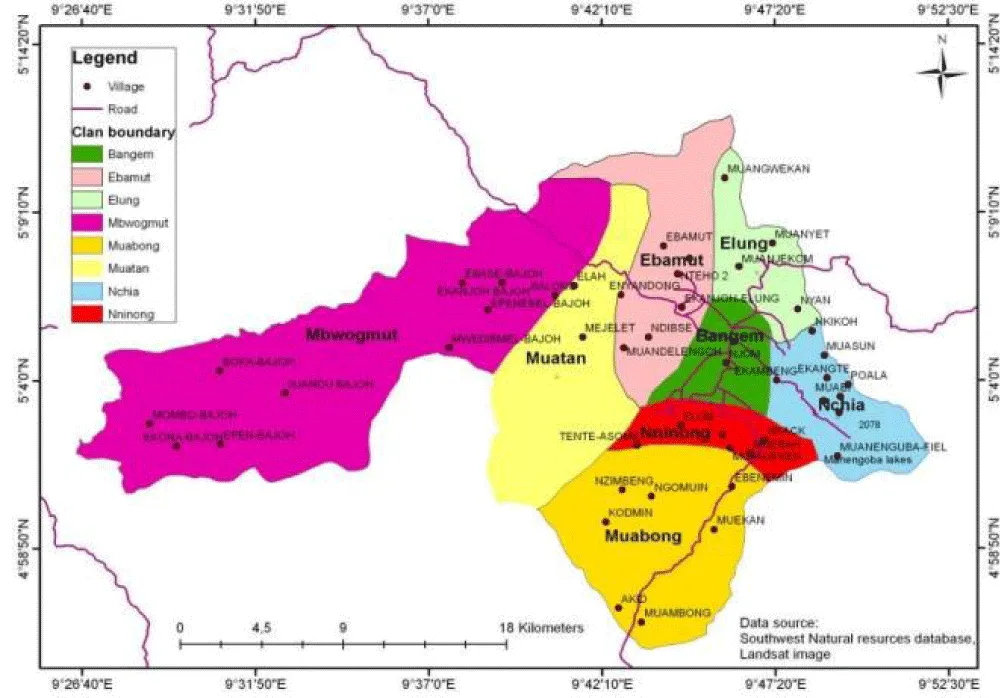
Bangem is a city located in the Southwest Region of Cameroon, situated between latitude 5°06’N and longitude 9°51’E [15]. It lies within the Kupe-Muanenguba division, nestled in the heart of the Cameroon volcanic line, a prominent geographical feature characterized by a series of mountain peaks and plateaus [16]. Bangem experiences a tropical rainforest climate, characterized by a distinct wet and dry season [17]. The wet season typically lasts from March to October, with annual rainfall averaging between 2,000 to 3,000 mm [15]. The dry season occurs from November to February, with average temperatures ranging from 22°C to 32°C throughout the year [17]. More so, the region is dominated by lush, evergreen rainforest vegetation, with a diverse array of tree species [18]. The forest is characterized by a multi-layered canopy, with emergent trees reaching heights of up to 50 meters [15]. Common tree species include Milicia excelsa, Terminalia superba, and Entandrophragma cylindricum [19]. The rainforest supports a rich and diverse wildlife community, including numerous species of primates, ungulates, carnivores, and avifauna [15]. Notable mammalian species found in the area include the drill (Mandrillus leucophaeus), the red-capped mangabey (Chlorocebus torquatus), and the forest elephant (Loxodonta cyclotis) [20]. The avifauna is particularly diverse, with over 300 bird species recorded, including the Double-spurred Francolin (Francolinus bicalcaratus) [21]. Additionally, this region is well-drained, with a network of rivers and streams flowing through the landscape [17]. The Mungo River, a major tributary of the Wouri River, is one of the primary waterways in the area, providing a vital source of freshwater for both the local communities and the diverse ecosystem [15] (Figure 1).
Data collection method
Documentation of the ecological parameters, activity patterns, habitat use, and behavioral interactions of the Double-spurred Francolin (Francolin bicalcaratus) within the Bangem forest ecosystem, 4 transects were established within the study area covering 1 kilometer each. Standardized walking surveys were carried out four times each month, and observations were recorded on the time of day, habitat type, behavioral activity, vocalization rate, and birds’ number. Additionally, ecological factors such as rainfall, sunshine, cloud, and wind intensity were recorded concurrently.
Data analysis
Compilation of the data collected was done from various methods into a comprehensive database. More so, data was analyzed by the use of chi-square (X2) and correlation (r) statistical models to identify patterns in francolin activity, habitat use, and behavioral interactions. Furthermore, an examination was done on the influence of seasonal weather changes and other environmental factors on francolin behavior. Also, integration was done on the findings with existing knowledge on francolin ecology to develop a comprehensive understanding of the species’ behavioral ecosystem in the Bangem forest.
Results
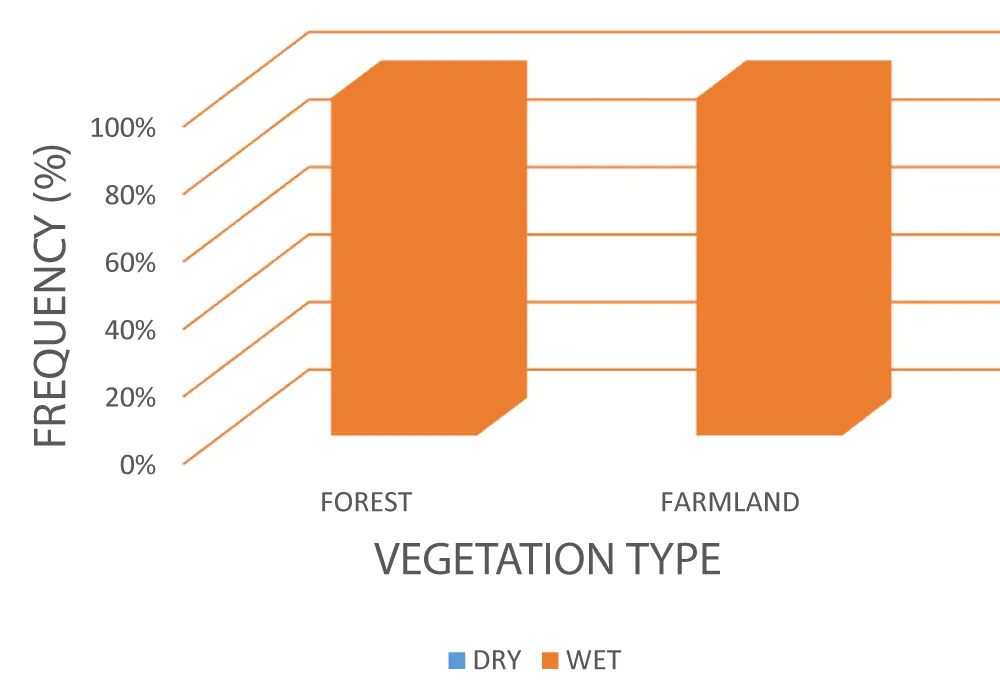
Seasonality revealed a significant association on birds’ aggregation X2 = 53.326 df = 2 P = 0.000 (Figure 2), Climatic conditions X2 = 36.093 df = 3 P = 0.000 (Figure 3), and vegetation X2 = 38.385 df1 P = 0.000 (Figure 4) respectively. Francolins are a type of ground-dwelling gamebird found in parts of Africa and Asia. Their aggregation behavior, or the way they form social groups, can be influenced by seasonal changes in their environment. During the breeding season, francolins typically become more territorial and solitary. Male francolins will establish and defend individual territories, and breeding pairs will stay together within their territory. This helps ensure access to mates and resources needed for successful breeding and nesting. As the non-breeding season approaches, francolins often begin to form larger social groups or coveys. This is thought to provide benefits such as improved predator detection and defense, as well as more efficient foraging. Francolins inhabit diverse environments across Africa and Asia, and their breeding and behavioral patterns are closely tied to the seasonal variations in local climatic conditions [7,22]. In many francolin habitats, the annual cycle is dominated by distinct wet and dry seasons, which have a profound influence on resource availability, vegetation structure, and other environmental factors that shape francolin ecology [7,23]. Francolins are ground-dwelling gamebirds that inhabit a variety of habitats, including grasslands, savannas, and shrublands. The seasonal changes in these vegetation communities play a critical role in supporting francolin populations. Precipitation patterns are a major driver of vegetation dynamics in francolin ecosystems. During the rainy season, the growth and productivity of grasses, shrubs, and other plants typically increase dramatically [24]. This seasonal flush of vegetation provides vital cover and food resources for francolins. For example, the seeds, fruits, and invertebrates associated with lush rainy season vegetation are important dietary items for many francolin species [7,22].
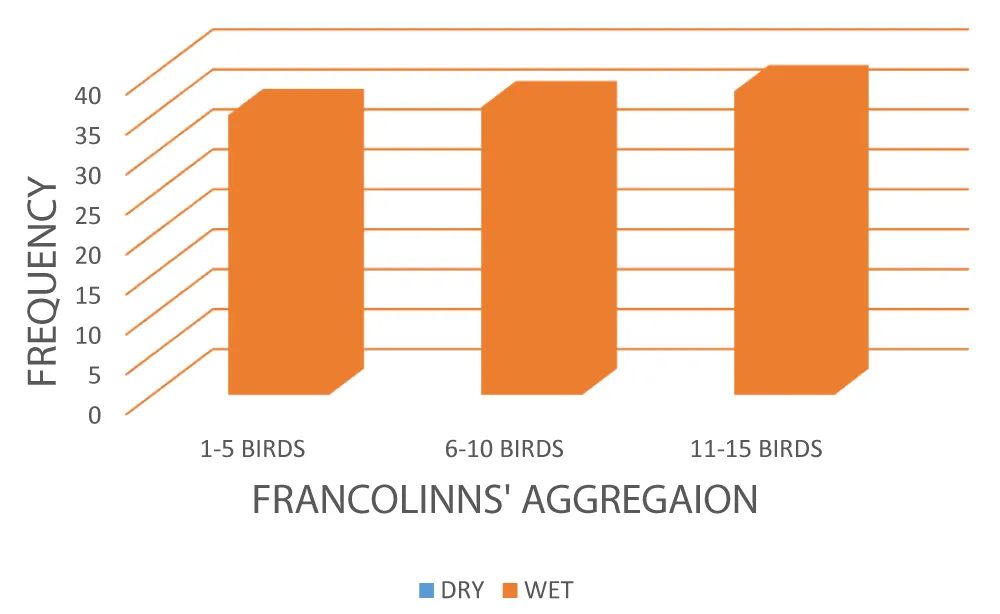
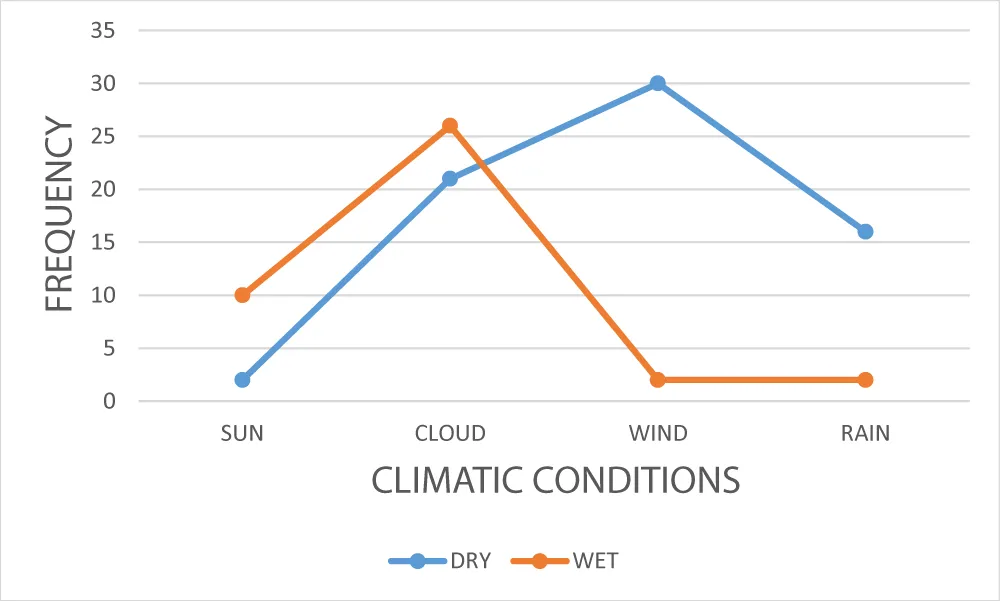
The size of these francolin coveys can vary seasonally, tending to be larger during the non-breeding season when food may be more scarce [25]. Seasonal changes in vegetation, food availability, and weather conditions can all influence the aggregation patterns of francolins. For example, during the dry season when food is less abundant, francolins may aggregate in larger numbers around reliable water sources [7]. Conversely, the lush vegetation growth during the rainy season can provide more dispersed food resources, allowing francolins to spread out more [22]. Seasonal changes like resource availability and environmental conditions can drive shifts in francolin aggregation, with birds being more territorial and solitary during the breeding season and forming larger social groups during the non-breeding season.
During the wet season, increased rainfall often coincides with a flush of vegetation growth, insect abundance, and other favorable conditions for francolins to breed and raise their young [7,22]. This seasonal peak in resource availability typically triggers an increase in francolin vocalizations, as males establish and defend territories, and engage in courtship and mating behaviors [7,26]. As the dry season progresses, the availability of food and cover may decline, leading to changes in francolin behavior and distribution [7,23]. Francolins may shift their foraging patterns, become less vocal, and concentrate in areas with more reliable resources, such as permanent water sources [7,22]. The timing and intensity of seasonal rainfall can vary significantly across the range of francolins, influenced by factors such as latitude, elevation, and regional climate patterns [27]. For example, francolins in equatorial regions may experience a more bimodal rainfall pattern, with two distinct wet seasons, whereas those in more temperate areas may have a single, pronounced rainy period [7,23]. These regional differences in climatic seasonality can lead to variations in the timing and duration of francolin breeding cycles, molt patterns, and other life-history events [7,22]. Francolins may also exhibit local adaptations in their physiology and behavior to cope with the specific climatic conditions of their environment. Ongoing climate change, with its potential to disrupt historic precipitation and temperature regimes, poses a significant threat to the seasonal synchronization of francolins and their environments [27]. Shifts in the timing, intensity, and variability of rainfall and other climatic factors could desynchronize the cues that trigger key francolin behaviors, leading to cascading effects on their reproduction, survival, and population dynamics [7,10]. Incorporating an understanding of climatic influences on francolin seasonality into conservation and management strategies will be crucial for ensuring the long-term resilience of these ecologically important birds in the face of a changing climate.
The dense vegetation growth also offers protection from predators and harsh environmental conditions like heat and cold. As the dry season progresses, vegetation communities often undergo substantial changes. Grasses and herbaceous plants may senesce and die back, while some woody plants may shed leaves or even become dormant [28]. This can significantly reduce the availability of food and cover for francolins. Francolins have adapted to cope with these seasonal shifts in vegetation. They may shift their foraging patterns, seek out remaining green vegetation and water sources, and aggregate into larger coveys for mutual protection and more efficient resource exploitation [25]. However, climate change is altering the timing and intensity of seasonal precipitation patterns in many francolin habitats [27]. This can lead to disruptions in the normal cycle of vegetation growth and senescence, potentially creating mismatches with francolin life history and resource requirements. For instance, a delay in the onset of the rainy season could mean that francolins breed and raise chicks when vegetation cover and food are still limited. Conversely, an abrupt end to the rains could cause a premature die-off of vegetation, leaving francolins without adequate resources during critical periods. Conserving francolins will require understanding and managing these complex interactions between seasonal vegetation changes and francolin ecology. Monitoring vegetation dynamics and adapting management strategies accordingly will be essential for maintaining healthy francolin populations in the face of climate change.
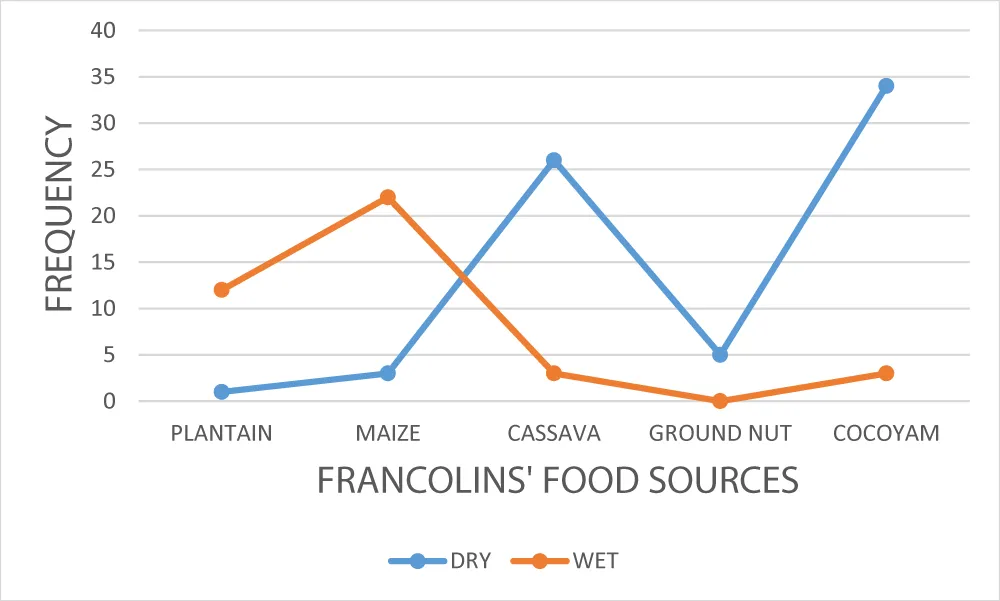
Additionally, seasonality is significantly associated with different food types consumed by the birds, X2 = 70.217, df = 4, P = 0.000 (Figure 5). Francolins are omnivorous birds that rely on a diverse array of seasonal food resources to meet their nutritional needs. The availability and abundance of key food plants like plantain, maize, cassava, groundnut, and cocoyam can have a significant impact on francolin populations. During the wet season, the lush growth of grasses, herbs, and other vegetation provides francolins with access to an abundance of seeds, fruits, and invertebrates [7,22]. This includes the starchy tubers and rhizomes of plants like cassava and cocoyam, which can be important food sources [29]. As the dry season progresses, the die-off of herbaceous vegetation can reduce the availability of these readily accessible food items. Francolins may then shift their foraging to rely more heavily on the seeds, grains, and nuts produced by woody plants like maize and groundnut [25]. The seasonal cultivation and harvesting of staple crops like plantain, maize, and cassava can also influence francolin foraging patterns [30]. After fields are cleared and planted, francolins may congregate to feed on spilled grains and invertebrates associated with the cropping system. As crops mature and are eventually harvested, francolins must seek out alternative food sources. The timing and abundance of these seasonal food resources can be critical for francolin reproduction and survival. For example, the availability of high-protein invertebrates during the breeding season is thought to be important for chick growth and development [7,22]. Climate change, however, is disrupting the normal seasonal patterns of precipitation, temperature, and vegetation growth in many francolin habitats [27]. This can lead to mismatches between the timing of francolin breeding/foraging and the peak availability of key food plants.
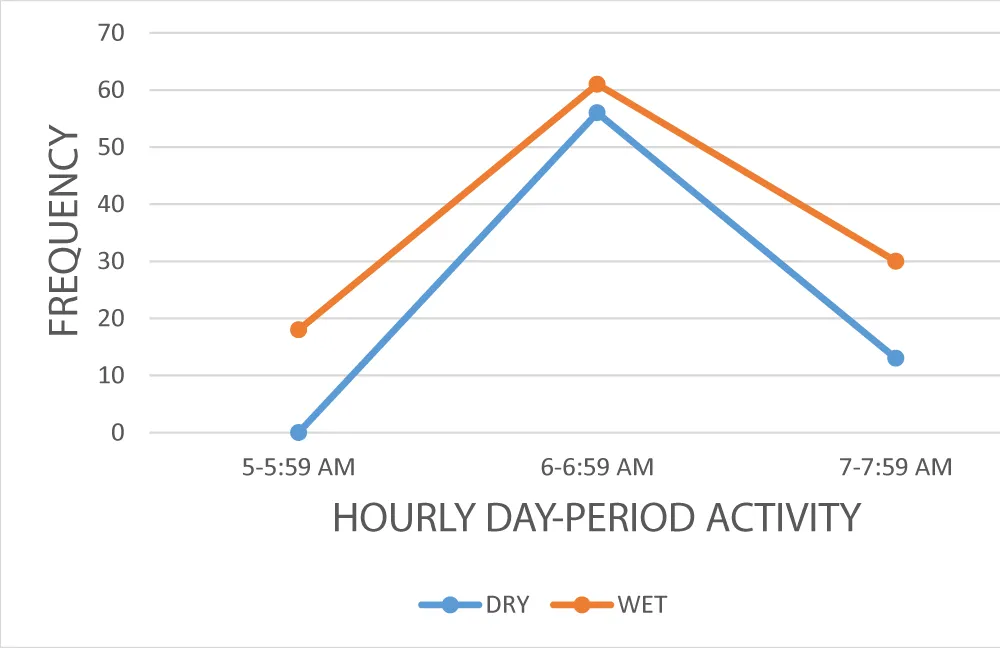
There is also a significant relation between seasonality and the various hourly periods of the day, X2 = 57.529, df = 2, P = 0.000 (Figure 6). Francolins exhibit distinct daily activity patterns that are closely linked to the seasonal changes in their environment [7,22]. During the wet season, when resources are generally more abundant, francolins tend to be active for longer periods throughout the day, utilizing a broader range of the available daylight hours [22,26]. This may include increased foraging, territorial defense, and other vital behaviors. For example, Hildebrandt’s francolin (Francolinus hildebrandti) in East Africa has been observed to be active from as early as 5 am to as late as 7 pm during the wet season, with peak activity periods in the morning and late afternoon [7,23]. In contrast, during the dry season, when resources may be more scarce, francolins often exhibit a more concentrated daily activity pattern, with longer periods of rest or inactivity during the hottest parts of the day [7,22]. This may help them conserve energy and minimize exposure to environmental stresses, such as high temperatures and reduced water availability. For instance, the red-winged francolin (Scleroptila levaillantii) in southern Africa has been documented to be most active in the early morning and late afternoon during the dry season, with a midday lull in activity [7,23]. The specific timing of francolin activity patterns can also be influenced by factors such as predation risk, competition, and human disturbance [7,22]. Francolins may adjust their daily routines to avoid peak activity periods of their predators or competitors, or to minimize encounters with human activities, such as agricultural work or ecotourism. Furthermore, the degree of seasonality in a given francolin habitat can vary depending on factors like latitude, elevation, and local climate patterns [7,27]. Francolins living in equatorial regions with less pronounced seasonal variations may exhibit a more consistent daily activity pattern throughout the year, compared to those in more temperate or arid environments with distinct wet and dry seasons. Understanding the seasonal changes in francolin day-period (hour) activity patterns is crucial for effective conservation and management strategies, as it can inform decisions on habitat protection, resource management, and mitigation of anthropogenic impacts [7,10]. Ongoing monitoring and research on these temporal activity patterns can provide valuable insights into the ecological requirements and adaptive strategies of francolins.
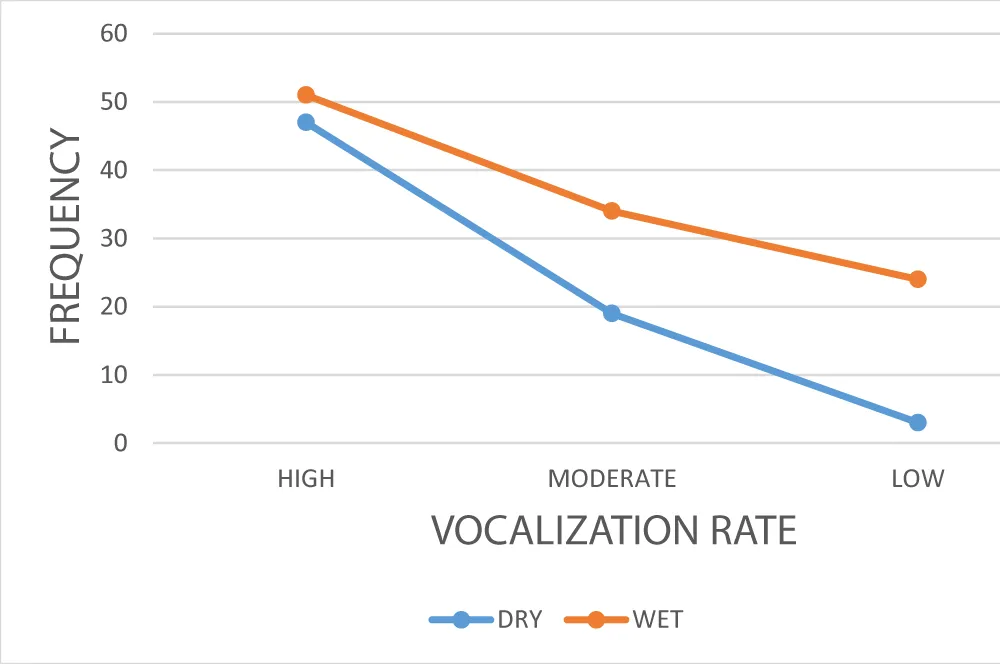
Furthermore, seasonality showed a significant link with vocalization communication of francolin birds, r = 0.647, P = 0.000 (Figure 7). During the breeding season, which typically coincides with the onset of the rainy season in many francolin habitats, males become highly vocal as they establish and defend territories [7,22]. This vocal activity serves to attract mates, signal dominance, and deter rival males. The repertoire of francolin vocalizations can be quite diverse, including loud, ringing calls, evocative whistles, and harsh alarm cries [7,22]. The specific call types and patterns used by males during the breeding season may vary between species and geographic regions. For example, the Hildebrandt’s francolin (Pternistis hildebrandti) is known to produce a distinctive, repeated “ko-ko-ko-ko” call that carries over long distances to advertise its territory [31]. The timing and frequency of this call are believed to be closely linked to the availability of resources and the female’s breeding cycle. As the dry season progresses and breeding activities wind down, the vocal activity of male francolins often decreases [7,22]. Francolins may still produce occasional contact calls or alarm vocalizations, but the intense territorial signaling is typically reduced. The behavioral and physiological mechanisms underlying these seasonal changes in vocalization are not fully understood, but are likely driven by a complex interplay of hormonal, environmental, and social factors [26,32]. Seasonal variations in food availability, predation risk, and other ecological conditions can influence the costs and benefits of vocal display, leading to strategic adjustments in vocalization patterns [33,34]. Climate change-induced disruptions to normal precipitation and vegetation cycles have the potential to desynchronize the seasonal cues that trigger and maintain francolin vocal behavior [27]. This could have cascading impacts on mate attraction, territory defense, and other key aspects of francolin reproduction and social dynamics. Conserving francolins will require understanding and managing these intricate relationships between seasonality, ecology, and vocal communication. Monitoring francolin vocalizations could provide valuable insights into population status and habitat health, informing more effective management strategies.
Discussion
Francolins (Francolin bicalcaratus) are a species of partridge that inhabit the rainforests of Central Africa, including Cameroon [2]. These ground-dwelling birds play an important role in the ecosystem as seed dispersers and prey for larger predators [35]. Understanding the factors that influence their activity and behavior is crucial for their conservation and management. One such factor is the impact of seasonal weather changes on their activity patterns. Rainfall is a key driver of resource availability and habitat conditions for francolins in the rainforest ecosystem. Studies have shown that francolins exhibit distinct seasonal variations in their activity levels in response to changes in rainfall [36,37]. During the rainy season, when food and cover are more abundant, francolins tend to be more active, spending more time foraging, vocalizing, and engaging in social behaviors [37]. Conversely, during the dry season, when resources are scarce, francolins decrease their activity levels and focus more on survival strategies, such as seeking shelter and conserving energy [36]. Temperature is another important factor that influences the activity patterns of francolins in the rainforest. Studies have found that francolins are more active during the cooler hours of the day, such as early morning and late afternoon, to avoid the heat stress of the midday sun [35,38]. During periods of high temperatures, francolins tend to seek refuge in dense vegetation or on the forest floor, reducing their overall activity levels [38].
The structure and composition of the rainforest habitat also play a significant role in shaping the activity patterns of francolins. Studies have shown that francolins prefer areas with a diverse understory vegetation, which provides ample cover and foraging opportunities [35,36]. Changes in habitat structure due to factors like logging or forest degradation can disrupt the availability of these critical resources, leading to shifts in francolin distribution and activity levels [35]. Understanding the complex interplay between seasonal weather changes, habitat characteristics, and francolin activity is essential for developing effective conservation strategies for this species in the rainforest ecosystems of Cameroon. Monitoring the impacts of climate change and habitat alteration on francolin populations can inform management decisions and guide habitat restoration efforts to ensure the long-term viability of these important avian species [37].
However, this study highlights the significance of seasonal weather changes, particularly rainfall and temperature, on the activity patterns of francolins (Francolin bicalcaratus) in the rainforest areas of Cameroon. These environmental factors, coupled with the influence of habitat structure, play a crucial role in shaping the behavior and resource use of these ground-dwelling birds. Incorporating this knowledge into conservation and management strategies is essential for the protection and sustainable coexistence of francolins in the region. During the rainy season, the increased precipitation leads to an abundance of vegetation growth and food resources for francolins. The dense understory and forest floor provide ample cover and nesting sites, which are crucial for the birds’ breeding and survival [36]. The increased availability of seeds, fruits, and insects in the rainy season provides a rich food source for the foraging francolins [37]. In contrast, the dry season brings about a scarcity of resources in the rainforest. The reduced rainfall leads to a decrease in vegetation growth and the drying out of food sources, such as fallen fruits and insects [36]. This resource scarcity forces the francolins to adjust their behavior and focus more on survival strategies, such as seeking shelter in dense vegetation and conserving energy [38]. The temperature changes associated with the seasons also impact the habitat and resource availability for francolins. During the hotter, drier periods, francolins tend to seek refuge in the cooler, more densely vegetated areas of the rainforest to avoid heat stress [38]. This can lead to a concentration of the birds in specific microhabitats, potentially increasing competition for limited resources.
Furthermore, the seasonal variation in rainfall and temperature can affect the structure and composition of the rainforest habitat itself. Periods of heavy rainfall can lead to the growth of dense understory vegetation, providing more cover and foraging opportunities for francolins [35]. Conversely, prolonged dry periods can result in the degradation of the habitat, reducing the availability of critical resources and altering the suitability of the environment for francolins. These seasonal changes in habitat and resource availability can directly impact the activity patterns, distribution, and overall population dynamics of francolins in the Cameroon rainforest. Understanding these complex relationships is crucial for developing effective conservation strategies and ensuring the long-term viability of francolin populations in this region.
Conclusion
The Study demonstrates the profound influence that seasonal weather changes have on the activity patterns and behaviors of the Double-spurred Francolin (Francolin bicalcaratus) in the rainforest environment of Bangem. During the wet season, when rainfall is abundant and vegetation growth is lush, the francolins exhibit more extended daily activity periods, utilizing a broader range of daylight hours for foraging, territorial defense, and breeding-related behaviors. The increased resource availability during this time allows the francolins to be active for longer durations without facing significant energetic constraints. In contrast, the dry season brings about a more concentrated daily activity pattern for the francolins, with longer midday periods of rest or inactivity. This behavioral shift is likely an adaptive strategy to conserve energy and minimize exposure to the environmental stresses associated with the dry season, such as higher temperatures, reduced water availability, and potential food scarcity. The timing and intensity of these seasonal weather variations, which can be influenced by factors like latitude, elevation, and regional climate patterns, play a crucial role in shaping the annual cycle of the Bangem francolins. Crucial life-history events, such as breeding, molting, and migratory movements, are closely synchronized with the seasonal changes in their environment. More so, the underscores the importance of incorporating an understanding of seasonal weather dynamics and their impacts on francolin behavior and ecology into conservation and management strategies for this species. Disruptions to the historical patterns of rainfall, temperature, and other climatic factors, as a result of ongoing climate change, could have significant implications for the long-term persistence of the Double-spurred Francolin in the Bangem rainforest ecosystem. Continued monitoring and research on the seasonal activity patterns and habitat use of the Bangem francolins will be essential for developing effective management plans that account for the dynamic nature of their environment and ensure the species’ resilience in the face of future climatic changes.
- Crowe TM, Hartley WJ, Mazangi CRP, Nichols G. Morphological, behavioral, ecological, and chromosomal diversity in the francolins (Phasianidae: Francolinus). Biological Journal of the Linnean Society. 1986;28:43–76.
- Madge S, McGowan P. Pheasants, Partridges and Grouse: A Guide to the Gamebirds of the World. London: Christopher Helm; 2002.
- Borghesio L, Laiolo P. Seasonal foraging and habitat use in the crested francolin Francolinus sephaena in a Ugandan savanna. African Journal of Ecology. 2004;42:52–59.
- Wilms T, Bobo KS, Sainge NM, Fermon H, Gockel HK. Birds of Mount Kupe and its surrounding lowlands, Cameroon. Ostrich. 2017;88:43–57.
- Serle W. A contribution to the ornithology of the British Cameroons. Ibis. 1950;92:343–376.
- Borrow N, Demey R. Birds of Western Africa. 2nd ed. Princeton: Princeton University Press; 2014. Available from: https://www.scirp.org/reference/referencespapers?referenceid=3721561
- Crowe TM. The evolution of guinea fowl (Galliformes, Phasianidae, Numidinae): taxonomy, phylogeny, speciation and biogeography. Annals of the South African Museum. 1978;76:43–136. Available from: https://www.biodiversitylibrary.org/part/74638
- Amakye JS. Seasonal changes in the activity and habitat utilization of the Double-Spurred Francolin Francolinus bicalcaratus in Ghana. Ibis. 1987;129:41–47.
- Crowe TM, Schwan H, van Loggerenberg K. Effects of fire, rainy season, and experimental confounding on a Transvaal Highveld grassland bird community. The Condor. 1981;83:124–135.
- BirdLife International. Species factsheet: Francolinus bicalcaratus. 2022.
- Ordway EM, Asner GP, Lambin EF. Deforestation risk due to commodity crop expansion in sub-Saharan Africa. Environmental Research Letters. 2017;12:044015. Available from: https://doi.org/10.1088/1748-9326/aa6509
- Sannier C, McRoberts RE, Fichet LV, Makaga EMK. Using the regression estimator with Landsat data to estimate proportion forest cover and net proportion deforestation in Gabon. Remote Sensing of Environment. 2014;151:138–148. Available from: https://doi.org/10.1016/j.rse.2013.09.015
- Fa JE, Peres CA, Meeuwig J. Bushmeat exploitation in tropical forests: an intercontinental comparison. Conservation Biology. 2002;16:232–237. Available from: https://doi.org/10.1046/j.1523-1739.2002.00275.x
- Luiselli L, Petrozzi F, Eniang EA. The crisis of bush-meat hunting and the pathways ahead. Biodiversity and Conservation. 2017;26:931–937.
- Eyebe AJP, Djeukam R, Vabi MB. Rapport sur l'état des forêts dans le sud-ouest du Cameroun. WWF-CARPO; 2012.
- Kamgang P, Chazot G, Agranier A, Upton BG. Geochemistry of the Cenozoic volcanism in the southern part of the Cameroon Line: constraints on its origin and mantle dynamics. Contributions to Mineralogy and Petrology. 2013;166(4):1003–1023.
- Suchel JB. Rainfall distribution and rainfall patterns in Cameroon: Varagraphe 1. Works and Documents in Tropical Geography. 1972;5. Available from: https://www.sciepub.com/reference/279908
- Cheek M, Onana JM, Pollard BJ. The plants of Mount Oku and the Ijim Ridge, Cameroon: a conservation checklist. Royal Botanic Gardens, Kew; 2000. Available from: https://doi.org/10.2307/1224539
- Sonké B. Floristic and structural studies of the forests of the Dja Faunal Reserve (Cameroon). Brussels: Université libre de Bruxelles; 1998. Available from: https://www.scirp.org/reference/referencespapers?referenceid=3033291
- Gonwouo NL, LeBreton M, Chirio L, Ndinga A, Diff D. The amphibians and reptiles of the Banyang-Mbo Wildlife Sanctuary, Cameroon. Salamandra. 2006;42(1):1–15.
- Fishpool LD, Tobias JA. Family Phasianidae (Pheasants and Partridges). In: Handbook of the Birds of the World. Vol. 2. 2005;6–59.
- Johnsgard PA. The quails, partridges, and francolins of the world. Oxford: Oxford University Press; 1988. Available from: https://books.google.co.in/books/about/The_Quails_Partridges_and_Francolins_of.html?id=7IRtQgAACAAJ
- Fry CH, Keith S, editors. The birds of Africa. Vol. 7. London: A&C Black; 2004. Available from: https://dokumen.pub/the-birds-of-africa-volume-vii-9781472927033-9780713665314.html
- Cramer W, Bondeau A, Woodward FI, Prentice IC, Betts RA, Brovkin V, et al. Global response of terrestrial ecosystem structure and function to CO2 and climate change: results from six dynamic global vegetation models. Global Change Biology. 2001;7(4):357–373. Available from: https://doi.org/10.1046/j.1365-2486.2001.00383.x
- Aebischer NJ, Potts GR. Spatial changes in grey partridge (Perdix perdix) distribution in relation to 25 years of changing agriculture in Sussex, UK. Gibier Faune Sauvage. 1998;11:293–308. Available from: https://www.conservationevidence.com/individual-study/65
- Catchpole CK, Slater PJ. Bird song: biological themes and variations. Cambridge: Cambridge University Press; 2008. Available from: https://books.google.co.in/books/about/Bird_Song.html?id=zYR6IfuFH6IC
- Intergovernmental Panel on Climate Change (IPCC). Climate Change 2021: The Physical Science Basis. Contribution of Working Group I to the Sixth Assessment Report of the Intergovernmental Panel on Climate Change; 2021. Available from: https://www.ipcc.ch/report/ar6/wg1/
- Knapp AK, Beier C, Briske DD, Classen AT, Luo Y, Reichstein M, et al. Consequences of more extreme precipitation regimes for terrestrial ecosystems. Bioscience. 2008;58(9):811–821. Available from: https://doi.org/10.1641/b580908
- Abotsi KE, Aziati AN, Abalo EK. Wild food plants used by the people of the Volta Region of Ghana. Genetic Resources and Crop Evolution. 2020;67(1):213–231.
- Tscharntke T, Klein AM, Kruess A, Steffan-Dewenter I, Thies C. Landscape perspectives on agricultural intensification and biodiversity–ecosystem service management. Ecology Letters. 2005;8(8):857–874. Available from: https://onlinelibrary.wiley.com/doi/epdf/10.1111/j.1461-0248.2005.00782.x
- Zimmerman DA, Turner DA, Pearson DJ. Birds of Kenya and Northern Tanzania. London: Christopher Helm; 1996. Available from: https://www.amazon.in/Birds-Northern-Tanzania-Identification-Guides/dp/0713639687
- Nottebohm F, Nottebohm ME. Relationship between song repertoire and age in the canary, Serinus canarius. Zeitschrift für Tierpsychologie. 1978;46(3):298–305. Available from: https://doi.org/10.1111/j.1439-0310.1978.tb01451.x
- Zahavi A. Mate selection—a selection for a handicap. Journal of Theoretical Biology. 1975;53(1):205–214. Available from: https://doi.org/10.1016/0022-5193(75)90111-3
- Searcy WA, Beecher MD. Song as an aggressive signal in songbirds. Animal Behaviour. 2009;78(6):1281–1292. Available from: https://faculty.washington.edu/beecher/Searcy%20&%20Beecher%20-%20AB2009.pdf
- Owens IP, Bennett PM. Ecological basis of extinction risk in birds: habitat loss versus human persecution and introduced predators. Proceedings of the National Academy of Sciences. 1983;80(14):4522–4525. Available from: https://doi.org/10.1073/pnas.200223397
- Rouquet R, Thiollay JM. The avifauna of the Tai National Park, Ivory Coast: ecological determinants. Revue d'Ecologie. 1988;43:131–158.
- Ndang'ang'a PK, Njoroge JB, Githiru M. Population status and habitat associations of the Nahan's Francolin Francolinus nahani in Budongo Forest, Uganda. Bird Conservation International. 2013;23(1):45–55.
- Borrow N, Demey R. Birds of Western Africa. London: Christopher Helm; 2001. Available from: https://www.scirp.org/reference/referencespapers?referenceid=2514352



 Save to Mendeley
Article Alerts
Subscribe to our articles alerts and stay tuned.
 This work is licensed under a Creative Commons Attribution 4.0 International License.